
Our global climate ambition
We're on course for one clear climate goal: full net zero by 2050 – across our own operations and the entire value chain. Our immediate focus? Our own emissions (scope 1 and 2): 80% down by 2030, and 100% by 2035. Not empty promises, but hard targets.
Our role as connector also drives us to make infrastructure works and shipping more sustainable. At the same time, we support the industry in our port area on their path to climate neutrality by 2050. Mitigation and climate adaptation: ensuring our infrastructure can handle drought and the broader challenges of a changing climate.

Our approach
Our CO₂ reduction roadmap turns ambition into action. In 2025, we developed roadmaps for our own emissions and infrastructure works. Shipping follows in 2026. Meanwhile, a climate stress test is preparing us for the effects of climate change – from extreme weather to rising sea levels. That way, we keep our port and infrastructure futureproof.
Reducing direct emissions
The largest share of our carbon footprint comes from indirect emissions (scope 3). Our own direct emissions (scope 1 and 2) represent just 0.10% of the total. Here's how we're bringing that down further.
Fewer buildings
We’re reducing the number of buildings from 9 to 5 – cutting gas consumption by 73%. Heating oil? Gone entirely. Two headquarters will make way for one sustainable landmark building in 2029.
Electric fleet
From 60% today to 95% electric by 2030. The exceptions? Vehicles with no electric alternative, or specialist equipment that was recently purchased.
100% green power
We generate part of our own electricity via solar panels. The rest we source from certified green suppliers.
Tackling indirect emissions
More than 99% of our emissions are indirect (scope 3). Think infrastructure works, dredging activities and shipping. We don't control these directly, but through our role as connector, we drive sustainability here too.
-
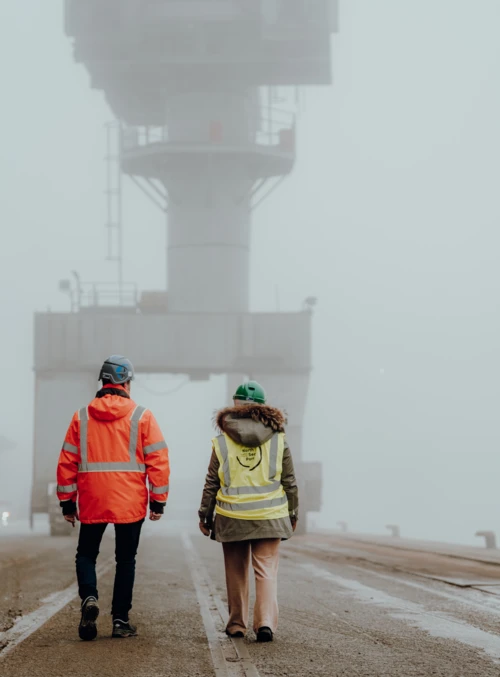
Together with Harwich Haven Authority, Port of Rotterdam Authority, Kystverket, and Rijkswaterstaat, we're committed to reducing CO₂, nitrogen oxides, sulphur oxides, and fine dust. That way, we’re giving the market more certainty to invest in innovative solutions.
-
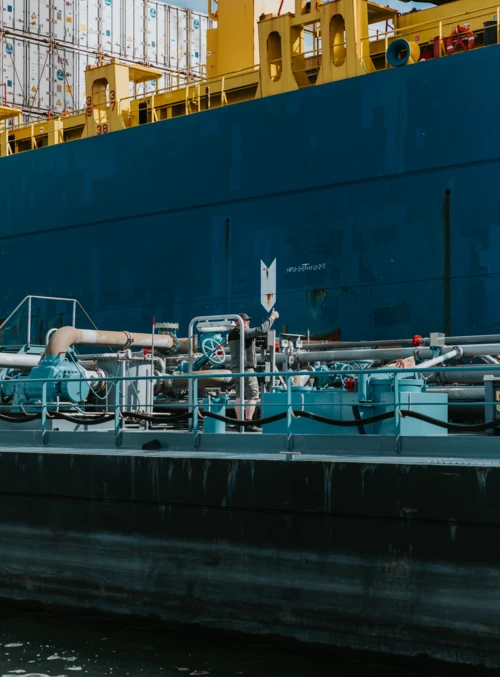
We're exploring drop-in fuels such as HVO (hydrotreated vegetable oil) for our tenders. HVO is compatible with existing dredging equipment and delivers short-term emissions reductions. All trailing suction hopper dredgers in our port area already run on HVOB30.
-
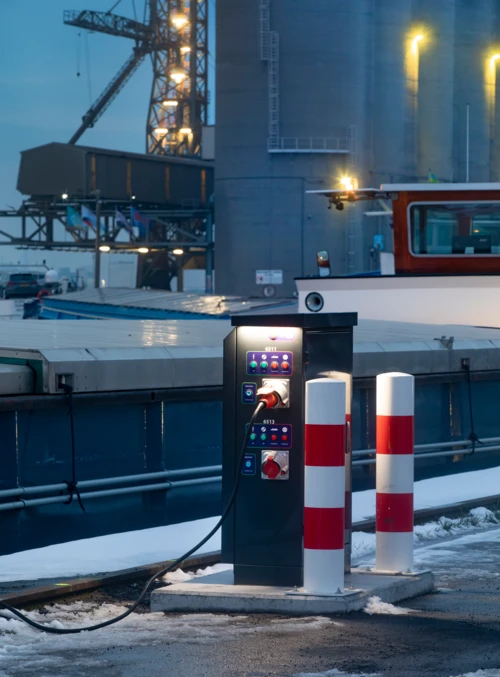
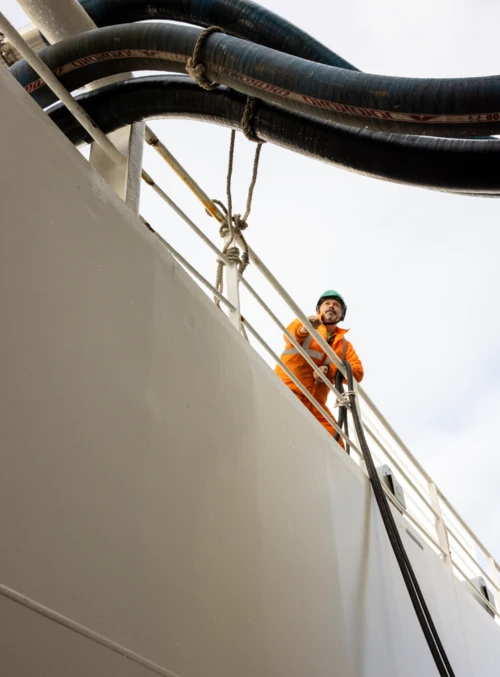
Diesel engines off, green electricity on. Shore power enables inland vessels to switch to grid electricity at the quayside. The result? Less CO₂, less noise, and better air quality. Our port area already has 28 shore power units with 111 connections
-
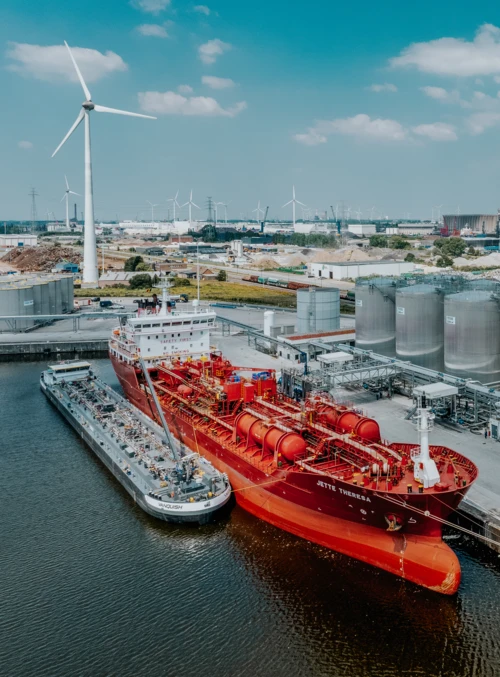
We're becoming a clean energy hub. We facilitate the full range of alternative energy sources – from biofuels to full electrification.
Reducing shipping emissions
Our lever effect extends well beyond our own quaysides. We use our role as a connector to decisively reduce emissions from shipping, too.
-
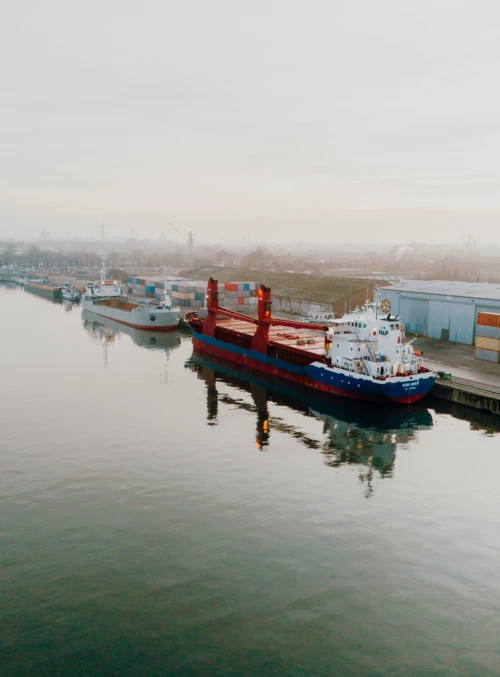
Ships holding an ESI certificate or a Green Award benefit from a sustainability discount. Those using cleaner fuels receive an additional reduction.
-
Together with ports – such as Gothenburg and Santos – we are establishing green corridors: maritime routes designed for clean and sustainable logistics flows. We share knowledge, invest in shore power, and prepare our infrastructure for alternative fuels.
-
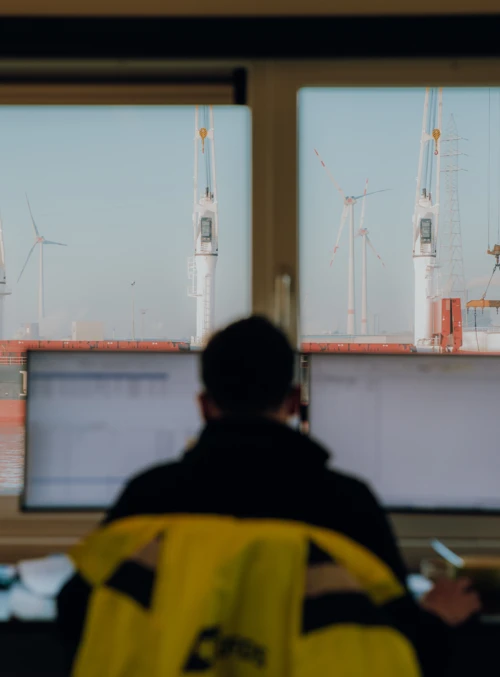
The less ships wait – thanks to just-in-time arrivals – the less CO₂ they emit. Our ambition? Cut average waiting times by 50%, using the North Sea Portal.
Supporting industry
Industrial emissions fall outside our scope – but we fully embrace our role as connector to make an impact here too.
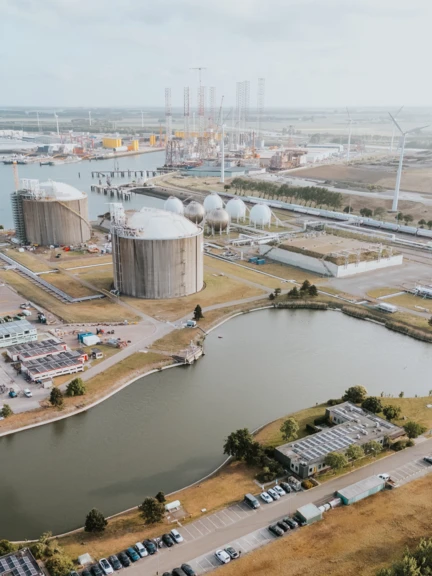
Smart Delta Resources
A cross-border network of businesses, knowledge institutions and public authorities. The goal? A competitive, climate-neutral and circular industry in the Scheldt Delta region by 2050.
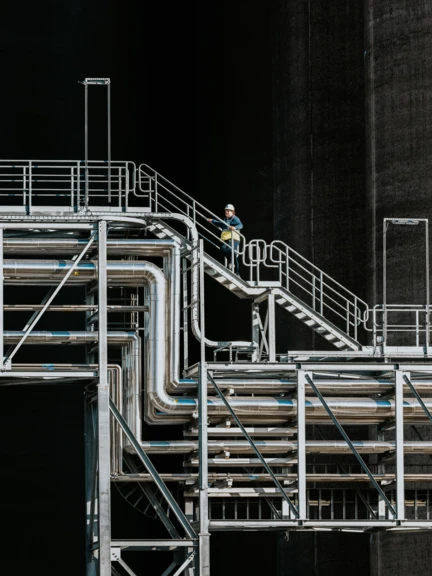
Cross-border CO₂ and H₂ infrastructure
We're building a cross-border pipeline network to transport hydrogen and CO₂ efficiently — to, from and within our port area.
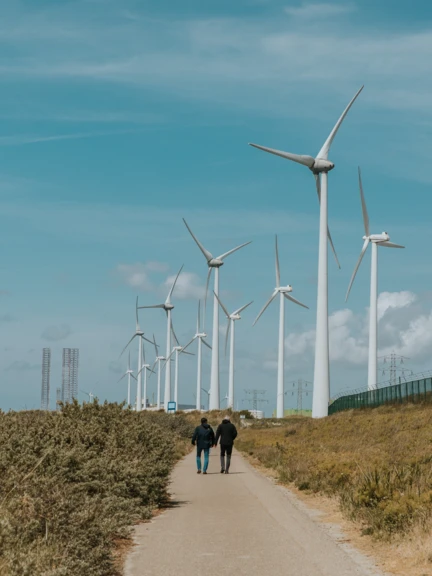
Expanding the high-voltage grid
The planned 380 kV connection extends the high-voltage network to Central Zeeland and Zeelandic Flanders – enabling large-scale electrification.
Protecting workers in the value chain
Our port runs on workers from across the value chain: suppliers, dock workers, port staff, seafarers and drivers. Their safety is our priority.
As a port authority, we take our coordinating role seriously – working alongside local authorities to ensure clear rules, strict safety requirements and accessible reporting channels.
Optimising logistics connections
We're reinforcing our logistics position with an integrated network of sea and inland shipping, rail, and road. Through modern infrastructure, digitalisation – via systems such as Portbase and North Sea Portal – and cross-border collaboration, we reduce congestion and speed up transit times.
Our course to 2030? Growing the number of intermodal connections, increasing rail's share to 15%, and keeping inland waterways at a minimum of 60%. Short-sea connections will expand significantly, too. Together, this builds a logistics network that is faster, more reliable and more sustainable.


Jump ship to
Sustainability starts with us. A safe workplace, inclusion and ethical business practices are what we’re all about. And we embed these values in every decision we make.
Our port is located alongside unique nature and residential areas. Discover how we combine economic growth with nature restoration, quality of life and climate resilience.
Together with our partners, we’re building a future-proof port. Find out how we are accelerating the energy transition, promoting circularity and making smart use of space.
We’re shaping the port of the future: sustainable, smart and resilient. We opt for greener mobility, innovation and collaboration to ensure efficient logistics.