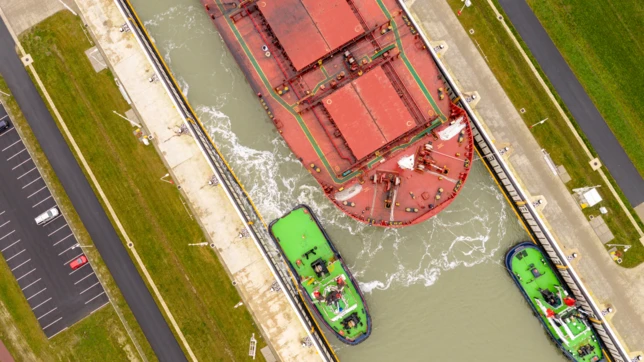
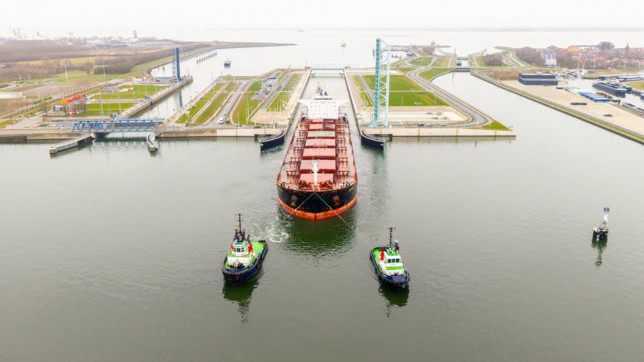
Europe’s new front door

The New Lock in Terneuzen isn’t just another piece of infrastructure – it’s our bold new entryway to Europe. Among the largest locks in the world, it opens the way for bigger ships, smoother traffic and a stronger link to global trade. The New Lock proves our point: trade winds may change, but we stay on course – larger, more efficient and built for the future.

A world-class lock

After seven years of construction, 330,000 m³ of concrete and 11.5 million m³ of dredged soil, the moment arrived: on 11 October 2024, the New Lock was officially opened by the kings of the Netherlands and Belgium. A true masterpiece of engineering and vision, literally and figuratively opening new doors.

At 427 metres long, 55 metres wide and 16.44 metres deep, it ranks among the largest locks in the world, on par with the Panama Canal. From now on, even the newest generation of seagoing vessels (Neo-Panamax) can navigate effortlessly to the heart of Europe.

The Terneuzen lock complex now consists of three locks:

  • The New Lock: for the largest sea vessels
  • The West Lock: for sea-going ships
  • The East Lock: for inland shipping

Together they form the North Sea Locks: the main gateway to the Ghent–Terneuzen Canal and to the heart of Western Europe. Thanks to their central position on Europe’s main transport corridors, goods move swiftly and reliably — by water, rail and road.

Figures that speak volumes

7 years of construction: from 2017 to 2024
330 k m3 of concrete: equal to 120 Olympic swimming pools
32 k tonnes of reinforcing steel — that’s four times the weight of the Eiffel Tower
11.5 mln m3 of soil dredged
5 football fields in surface area
16.44 metres deep – enough to fit a five-storey building
427 metres long – twice the height of the Euromast in Rotterdam
55 metres wide

Why this lock changes our course

Global trade is evolving. Fast. Ships are getting bigger, logistics more complex, and reliability more crucial than ever. With the New Lock, we give our position as a leading European port an unprecedented boost.

Bigger ships, bigger ambitions

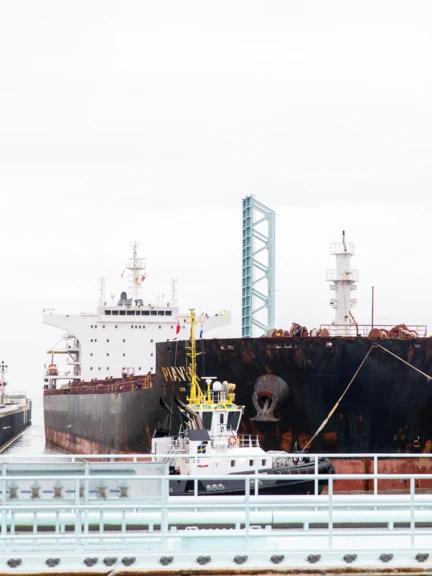
International trade is sailing on ever-larger vessels. Neo-Panamax ships up to 366 metres long and 49 metres wide – over 100 metres longer than before – can now sail straight from the North Sea into our port.

Picture of the North Sea Locks in North Sea Port Terneuzen.

Always open for business

The New Lock gives North Sea Port a second, larger sea lock, alongside the existing West Lock. That means continuous access to the port area. Maintenance on one lock? The other stays fully operational. Our companies are guaranteed to stay supplied. No delays, no downtime. Just reliability, 24/7.

Picture of people looking at a ship sailing through the lock at the Binnenhaven in Vlissingen.

Faster flow for inland shipping

Inland navigation also benefits fully. The New Lock provides greater capacity, allowing more vessels to pass through simultaneously. The result? Shorter waiting times and greater reliability for inland shipping, already responsible for over 60% of our hinterland transport.

A wave of benefits

For businesses

Thanks to the New Lock, even the largest vessels can now reach our port. That means more cargo per ship, fewer transport movements and a more efficient, sustainable flow of goods. The result? Major cost savings – up to hundreds of thousands of euros per vessel.

For the logistics sector

More lock capacity means shorter waiting times for inland vessels. This strengthens waterborne transport and makes our port even more attractive as a multimodal hub. Beyond capacity, the New Lock also increases the reliability of our port operations, ensuring continuous sea access, regardless of maintenance or weather conditions.

For Europe

It’s not just about the lock, but the connections it enables. The North Sea Locks form a crucial link in the future Seine–Scheldt connection, allowing large inland vessels of up to 4,500 tonnes to navigate from our port all the way to Paris, an urban region of 10 million people.

For our port

The New Lock strengthens our position as a leading European port and proves we’re ready for the future. It supports our strategic ambitions: more multimodal connectivity, sustainable growth and a stronger competitive edge.

A boundary-pushing project

The New Lock proves what’s possible when the Netherlands and Belgium join forces. Commissioned by the Flanders–Netherlands Scheldt Commission (VNSC), this project was realised by Sassevaart – a consortium of Dutch and Belgian companies BAM Infra, Stadsbader Contractors, DEME, Van Laere NV and Equans. Together, they spent seven years building this masterpiece of engineering.

Dive deeper into the story of the New Lock

Curious about the stories behind this groundbreaking project? We’re opening the (lock) gates for you. Dive in: