Shipping
-
Sail more for less? Apply online for a discount code for seagoing activities within our port. Simply fill in the form.
To the application form
-
Inland shipping and paperwork? We don’t ride that wave. Instead you register your journey with North Sea Port electronically. Fill it in once, and you're good to go – from arrival to departure.
This has been mandatory in Flanders for some time and in the Netherlands since 2024. It is no longer possible to register via marine radio. Phew! No more double work, no more repetition en route. All data is automatically shared with the waterway authorities on your route.
Register easily via RiverGuide or BICS. -
Pick what works for you. All these platforms are fine:
- RiverGuide
- BICS (Binnenvaart Informatie en Communicatie Systeem)
- ContainerPlanner (Autena Software)
- Navigis (Tresco)
- Periskal Inland ECDIS Viewer
- UAB-Online
- Vemasys (Blue Century)
-
Skip digital reporting? Here’s the catch. When you enter and tie up, we need your data. In an incident, that’s what we pass to emergency crews: cargo, crew, what’s on board. No data means slower response, more risk.
Your info also powers our invoices. Miss it and chances are you’ll get the wrong bill, and both you and we waste time fixing it.
Don’t file? We’ll chase you for the details. Keep dodging it and stricter steps may follow. We don’t love doing that. Better to log it once and sail on. -
You can create your digital report while you’re moored and send it once you’re back online.
For traffic info, VHF is always there: channels 05, 06, 09 and 11. Use these in tricky situations or to get port updates.
We only ask that your trip details are shared in advance through BICS (or another tool). -
No. At North Sea Port we stick to the same tools used by other ports and waterway managers. We don’t run a separate system – you just pick the one that works best for you (see “Which system can I use to register?”).
The sector is very clear: everybody wants things simpler. That’s why more and more authorities connect to BICS or shared platforms like RiverGuide and Eriba. -
No. Once per voyage is enough. Just log your details digitally and send an update if something changes, like crew joining or leaving.
We use BICS, connected to both Dutch and Flemish systems. One check-in covers your whole route.
If you cross the border, you’ll still need to send a repeat report. But you don’t start from scratch – just add the extra recipient. This step will disappear soon. -
Yes. Sailing from outside Terneuzen to Evergem? A report in IVS Next is all you need. Coming up from the south (e.g. Evergem)? Report to De Vlaamse Waterweg.
Stopping at a waiting area? The system logs it automatically as “waiting”. Continue your trip and it knows you’re just passing through.
If you stop at a quay known for loading or unloading, the system may treat it as if you’re staying there for cargo operations. -
For berth requests, please contact us via the correct VHF channel.
- Canal ports NL/BE – VHF channel 5 – Call sign: North Sea Port
- Ghent–Terneuzen Canal (RWS) – VHF channel 11 – Call sign: Port Authority
- Terneuzen, Vlissingen-Oost & Outer Harbour – VHF channel 9 – Call sign: Havendienst
- Vlissingen Braakmanhaven – VHF channel 78 – Call sign: Braakmanhaven
-
The interactive map shows all berths within North Sea Port. Click on a location for details such as berth type, managing authority (North Sea Port or Rijkswaterstaat), maximum draught or function.
Mooring at waiting areas is only permitted with the port authority’s approval.
- Vlissingen: VHF 9, call sign ‘Havendienst Vlissingen’
- Ghent & Terneuzen: VHF 5, call sign ‘North Sea Port’
- Braakmanhaven: VHF 78, call sign ‘Braakmanhaven’
Some berths along the Ghent–Terneuzen Canal are managed by Rijkswaterstaat. These locations appear on the map but are not allocated by us. They include:
- Goesekade
- Waiting posts at the Terneuzen lock complex
- Waiting areas on the west and east sides of the Schependijk
- Canal posts Terneuzen
- Cone posts (opposite Massagoedhaven)
- Canal posts Sluiskil (north of Norden Shipyard)
- West quay, Side Canal D (Westkade, Zijkanaal C), Sluiskil
- Mooring places, Side Canal G (Zijkanaal G)
- West quay, Side Canal H (Westkade, Zijkanaal H), Sas van Gent
- Mooring place, Sas van Gent Rosier
- Mooring place, Sas van Gent Rosier Zwavelkade
- Mooring place, Canal quay 4 (Kanaalkade 4), Sas van Gent
- Mooring place, Sas van Gent Glasfabriek
- Mooring place, Canal quay 5 (Kanaalkade 5) “Douanekade”, Sas van Gent
Ghent Use the ‘my location’ button to zoom in quickly. No rights can be derived from the map.
-
Want your stay to run smoothly? Connect4Shore shows you exactly where to plug in, top up water or drop off waste. Easy! Our shore power is 100% green. That’s good for your fuel bill and the planet. Water or waste? Sorted in a few clicks via Connect4Shore. Check out more info and provider contacts on our Services & partners page.
-
Yes. In addition to international, European, national and local legislation, specific port regulations and by-laws also apply within the port area. For the port areas of Borsele, Vlissingen and Terneuzen, this is laid down in the Port By-laws and the accompanying Port Regulations.
For the Ghent port area, these rules can be found in the Port Police Regulations North Sea Port Port Area Ghent and in the Geographical UAS Zone Regulation – Geozone EBR55 Ghent Harbour.
-
What is the port traffic by-law ghent?
It is the regulatory framework that allows port vehicles, based on their technical specifications, to operate while safeguarding road safety and protecting roads, bridges and structures in the port area.Why is there a port traffic by-law?
Port vehicles that technically deviate from the provisions of the Royal Decree of 15.03.1968 laying down the general technical requirements for motor vehicles, their trailers, their components and their safety equipment (the “Technical Regulations”), may, when they wish to use public roads within the area covered by the Port Traffic By-law Ghent, be recognised as port vehicles under the regime of this by-law (instead of such transport movements falling under the stricter rules of exceptional transport).Which vehicles fall under the port traffic by-law?
The by-law applies to port vehicles that deviate from the 15.03.1968 Royal Decree (“Technical Regulations”) and that move under their own power on public roads within the port area.
Port vehicles are designed for handling and transporting goods and are intended to be used only in the port.
Vehicles that remain strictly inside the port and do not use public roads do not need recognition as port vehicles. They are still subject to any safety inspections required by higher regulations, but that falls outside the scope of the port traffic by-law. -
What are port vehicles?
Port vehicles are defined as: motor vehicles, trailers, convoys and all specialised vehicles, with or without an engine, intended exclusively for the handling and carriage between loading and unloading quays, storage sites, warehouses and sheds in a port area, excluding passenger cars, dual-purpose vehicles and minibuses.
Port vehicles are classified into several categories, to which different provisions apply:- A1: port vehicles of special construction which can move under their own power and which, due to their construction and origin, can reach a maximum speed of 30 kilometres per hour on horizontal roads.
- A3: slow transport port vehicles which can move under their own power and are used for the transport of goods on and between the industrial sites in the port area.
- A4: port vehicles which can move under their own power and are used for the transport of goods on and between the industrial sites in the port area.
- B1: port vehicles of special construction which are intended solely to be towed and whose speed is limited to 30 kilometres per hour.
- B3: slow transport port vehicles intended solely to be towed by other slow transport port vehicles and used for the transport of goods on and between the industrial sites in the port area.
- B4: port vehicles intended solely to be towed and used for the transport of goods on and between the industrial sites in the port area.
In this regard:
• port vehicles of special construction: port vehicles which, due to their construction or permanent modification, are intended to be used as equipment for loading, unloading or moving cargo on industrial sites within the port area;
• slow transport port vehicles: port vehicles with a maximum speed of 40 kilometres per hour due to their construction or origin.
When must a vehicle be recognised as a port vehicle?
When the vehicle is a port vehicle which technically deviates from the provisions of the Royal Decree of 15.03.1968 laying down the general technical requirements for motor vehicles, their trailers, their components and their safety equipment, in particular Article 32bis, and which moves under its own power on public roads within the port area.Does the port traffic by-law also apply to vehicles that remain on the terminals (or that are transported on a low-loader)?
For vehicles that are not operated on public roads, recognition as a port vehicle is not required. These vehicles remain subject to any safety inspections imposed by higher-level legislation, but this falls outside the scope of the port traffic by-law.Does the port traffic by-law also apply to vehicles that are only in transit through Ghent (to be put into service elsewhere)?
These are vehicles in transit and are therefore not registered with the DIV. Consequently, they do not need to be recognised as port vehicles. This falls under the Royal Decree of 20.07.2001 concerning the registration of vehicles (Article 2 §2, 3°).Does the port traffic by-law also apply to company fire engines?
No. Port vehicles are vehicles intended for the handling and carriage of goods and used solely in the port area.
Port vehicles are defined as: motor vehicles, trailers, convoys and all specialised vehicles, with or without an engine, intended exclusively for the handling and carriage between loading and unloading quays, storage sites, warehouses and sheds in a port area, excluding passenger cars, dual-purpose vehicles and minibuses.
Fire engines therefore fall outside the scope of the port traffic by-law.May goods be transported with port vehicles A1 and B1?
No. Port vehicles of categories A1 and B1 are only permitted on public roads in an unladen condition.Must combinations consist solely of port vehicles?
No. It is permitted to form combinations consisting of port vehicles and non-port vehicles.
However: In such a combination, the category to which the port vehicle belongs determines where and how this combination may be used under the port traffic by-law.
In concrete terms, the conditions laid down in the port traffic by-law apply to the port vehicle of the lowest category forming part of the convoy in question. Port vehicles of categories A1 and B1 are considered the lowest category. Port vehicles of categories A4 and B4 are considered the highest category. If a recognised port vehicle is used in combination with a non-recognised port vehicle, the provisions of Article 32bis of the Technical Regulations must be complied with.What additional driving licence requirements does the port traffic by-law impose?
The following legislation remains applicable:- the Royal Decree of 23.03.1998 concerning the driving licence;
- the Royal Decree of 17.03.2019 concerning the driving licence for port vehicles;
- the Decree of the Flemish Government of 23.10.2020 determining the conditions for the professional competence of the driver of a longer and heavier convoy.
In addition, the port traffic by-law provides for additional driving licence requirements in a limited number of cases.- For port vehicles with a maximum speed limited by their construction to 40 km/h or less and with a total length of less than 18.75 metres, a category B driving licence is sufficient (drivers born before 01.10.1982 theoretically do not need a driving licence). This therefore applies to port vehicles of categories A1, B1, A3 and B3.
- For driving port vehicles of categories A4 and B4 with a total length of less than 18.75 metres, a category C driving licence is required on all roads within the geographical scope of the port traffic by-law.
- The driver of an operational transport with a total length of more than 18.75 metres carried out on the main roads within the port area must meet the following conditions: 1° hold a certificate of competence for driving a convoy as referred to in Article 4 or 37, first paragraph, of the Decree of the Flemish Government of 23.10.2020 determining the conditions for the professional competence of the driver of a longer and heavier convoy; and 2° have at least five years’ experience in driving vehicle combinations requiring a category C+E driving licence; and 3° not have incurred disqualification from driving during the year preceding the driving of the convoy.
-
Where does the Port Traffic By-law Ghent apply?
The Port Traffic By-law Ghent applies:- within the port area under the management and operation of North Sea Port Flanders (as defined by the Regional Spatial Implementation Plan “Zeehavengebied Gent”);
- on the R4 (Dwight Eisenhowerlaan) from the turbo roundabout (N424) up to and including the Schansakker interchange (thus the connection between the Volvo Trucks industrial sites located at the Schansakker exit and the port area, as defined in the RSIP).
Is there a list available of the road network to which the Port Traffic By-law Ghent applies?
The roads to which the Port Traffic By-law Ghent applies can be consulted- on a map,
- and in text (in the Decree of the Flemish Government dated 20.12.2024 establishing the scope of application of the by-law on port vehicle traffic in the port of Ghent).
Which roads are considered main roads?
The main roads are:- John F. Kennedylaan
- Dwight Eisenhowerlaan from the turbo roundabout to the Schansakker interchange (exit 8).
What are roads or structures with normal load capacity?
These are roads or structures that are not by default able to bear the higher weights of port vehicles and where, as a first rule, traffic in terms of weights must comply with the rules for “normal traffic” as laid down in the Royal Decree of 15.03.1968 laying down the general technical requirements for motor vehicles, their trailers, their components and their safety equipment (Technical Regulations – RD 15.03.1968), Article 32bis, supplemented with the rules for LHV (long and heavy vehicles), as set out in the Decree of the Flemish Government establishing the by-law on port vehicle traffic in the port of Ghent, Article 67 §2 and Article 75 §3.
These are all roads or structures listed under ‘Roads or structures with normal load capacity’.What are roads or structures with limited increased load capacity?
These are roads or structures that can bear vehicles whose weights comply with the provisions in the left-hand column of Article 67 §1 of the Decree of the Flemish Government establishing the by-law on port vehicle traffic in the port of Ghent, including a maximum total mass of 48 tonnes for a four-axle single vehicle and a maximum axle load of 12 tonnes.
These are all roads or structures listed under ‘Roads or structures with limited increased load capacity’.On which main roads may port vehicles be used?
Download the overviewMay recognised port vehicles also be used outside the port area?
When a recognised port vehicle leaves the geographical scope of the Port Traffic By-law, it loses its special status as a port vehicle and must therefore comply with the Royal Decree of 15 March 1968 laying down the general technical requirements for motor vehicles, their trailers, their components and their safety equipment (the “Technical Regulations”) and the Royal Decree of 1 December 1975 laying down the general traffic regulations and the use of public roads (the “Traffic Regulations”). -
Which port vehicles must be registered with the DIV?
Port vehicles that move under their own power and use public roads in the port area must be registered with the DIV (the Directorate for Vehicle Registration).
In concrete terms, only port vehicles of categories A1, A3 and A4 fall under the obligation to register with the DIV.
Towed or drawn port vehicles of categories B1, B3 and B4 are exempt from registration (Article 2, §2, 6° of the Royal Decree of 20.07.2001 concerning the registration of vehicles).
A trailer of category B4 which is used solely as a port vehicle within the port area is therefore not necessarily required to be registered and consequently does not have its own license plate. The trailer is then fitted with a duplicate of the license plate of the towing vehicle.
How can I re-register my vehicle (as a port vehicle) if I no longer have all the documents for this vehicle?
For re-registration, you must have a fully completed and signed application for registration for each vehicle, accompanied by an insurance sticker, with box X10 explicitly stating that it concerns re-registration as a port vehicle. The old registration certificate must also be enclosed for each vehicle.If you no longer have the old registration certificate, you must request a certificate of loss from the police.
No approval is required for the re-registration of vehicles under the PO category, and no approval number needs to be entered during the registration procedure.
For vehicles that already have a European-format license plate, this plate can be entered in box A of the registration application so that these vehicles can keep the plate and only a new registration certificate will be issued.
For vehicles that do not yet have a European-format license plate, both a new plate and a new registration certificate will be issued.
In accordance with Article 2, §2, 6° of the Royal Decree of 20 July 2001 on the registration of vehicles, a semi-trailer/trailer does not need to be registered if it is used as a port vehicle and therefore only drives within the port area.
The semi-trailer/trailer must only be equipped with a duplicate of the towing vehicle and, in that case, does not need to be registered (you can have the current license plate removed).
Can a vehicle be recognised as a port vehicle without being registered with the DIV?
No – recognition as a port vehicle implies that the vehicle will be used on public roads and therefore registration with the DIV is always* required first.
*Subject to certain exceptions to the registration requirement for vehicles, as provided for in the Royal Decree of 20.07.2001 concerning the registration of vehicles: towed or drawn port vehicles of categories B1, B3 and B4 are exempt from registration.Under which code must port vehicles be registered with the DIV?
A port vehicle may be registered with the type “company equipment” (J1: MT on the registration certificate) or as type “Port vehicle” (J1: PO on the registration certificate).Do vehicles that already have a DIV license plate need to apply for a new one, or can the existing DIV license plate be kept?
Vehicles that are already registered with the DIV may retain this registration, and therefore also keep their current DIV license plate. After recognition as a port vehicle, they also receive a port license plate in addition.What is the advantage of putting a port license plate on a vehicle that already has a ‘regular’ (DIV) license plate?
Port vehicles that technically deviate from the provisions of the Royal Decree of 15.03.1968 laying down the general technical requirements for motor vehicles, their trailers, their components and their safety equipment (the “Technical Regulations”), may, when they wish to use public roads within the scope of the Port Traffic By-law Ghent, be recognised as port vehicles under the regime of this by-law and can then be visually identified as such via the port license plate affixed to the vehicle.
If such port vehicles are used on public roads within the port area and are not approved as port vehicles, they must comply with the general regulations on exceptional transport. The port traffic by-law therefore introduces a port-specific permit system for so-called “exceptional transport”. -
How is a vehicle approved as a port vehicle?
In order to be (and remain) approved as a port vehicle, a control body carries out a prior inspection and subsequently a periodic (annual) inspection.
The owner wishing to have a vehicle approved as a port vehicle must therefore contact a control body authorised for the intended category of port vehicle.
The owner of the port vehicle then provides the port operations coordination centre in due time with the required inspection certificates (via havenvoertuigen@northseaport.com), so that the vehicle can be approved/registered as a port vehicle.How can vehicles for which we do not have a Proces-verbaal van Benaming (official designation report -PvB)/ Proces-verbaal van Goedkeuring (approval report -PvG) be recognised as port vehicles?
Where a vehicle does not have a PvB or PvG, the inspection certificate (issued by the control body) replaces the PvB and PvG.Which companies are recognised as control bodies for port vehicles?
Under ‘Get your port vehicle inspected’ on our Port Traffic By-law page you will find an overview of the control bodies authorised for each category of port vehicle.
Where can I get approval for A4 and B4 vehicles with a length < 18.75m?
For this type of vehicle SBAT or a KOV partner is authorised.What about vehicles longer than 18.75m?
The owner wishing to have a vehicle approved as a port vehicle of category A4 or B4 that is used as a port vehicle in convoys of port vehicles of those categories with a length exceeding 18.75 metres, submits to the port operations coordination centre a report issued by a technical service as referred to in Article 16ter of the Royal Decree of 15.03.1968, showing that the vehicle complies with the technical requirements for those categories of port vehicles established under the said Decree.
That report serves as an inspection certificate of conformity.
After approval by the port operations coordination centre, the port license plate can be collected from said coordination centre.Which documents must be submitted to the control body?
The owner of the vehicle must submit the following documents to the control body:- the international motor vehicle insurance card,
- the most recently issued inspection certificate,
- the registration certificate of the competent Federal Public Service,
- the reference report lifting equipment/towing vehicle, referred to in Article 281 of the ARAB,
- the proces-verbaal van goedkeuring (PVG) or proces-verbaal van benaming (PvB).
Are there costs associated with having a vehicle approved as a port vehicle?
The control bodies may charge costs for carrying out the inspections. The cost of carrying out the inspections is determined by the control bodies or the KOV partners and is also invoiced directly by them to the owner of the vehicle. North Sea Port is not involved in this. North Sea Port does not charge any fees for the approval/registration as a port vehicle, nor for making the port license plate available.When is a provisional inspection certificate issued?
The control body issues a provisional inspection certificate of conformity if the inspection shows that not all administrative requirements have been met. The provisional inspection certificate is valid for thirty days. If the international motor vehicle insurance card is not submitted to the control body at the time of inspection, the provisional inspection certificate is valid for only fifteen days.
The control body converts the provisional inspection certificate into an inspection certificate of conformity if the owner of the port vehicle demonstrates that all administrative requirements have been met. The owner must demonstrate this within the validity period of the provisional inspection certificate to the control body that issued the provisional inspection certificate.When must a port vehicle undergo the annual inspection again?
A port vehicle must undergo the prescribed inspection annually. This inspection must take place again no later than one year later. The annual inspection may take place no earlier than sixty days before the expiry date of the inspection certificate of conformity. If the annual inspection takes place before the expiry date of the current inspection certificate of conformity, the new validity period begins on the expiry date of the earlier inspection.How does the annual inspection of port vehicles relate to the quarterly inspection of lifting equipment?
The quarterly inspections required for lifting equipment remain applicable. These fall outside the scope of the port traffic by-law and are imposed by other legislation.
For port vehicles of categories A1-B1-A3-B3, the recognised control bodies also hold the required accreditations to carry out the quarterly inspections of lifting equipment.
The inspection of the technical requirements may be carried out simultaneously with the periodic inspections in the context of occupational safety.What is a port license plate?
Every vehicle approved as a port vehicle has a port license plate issued by the port operations coordination centre. -
Which transport movements (relocation or operational transport) may be carried out without a route permit?
When the transport movement remains within the conditions listed below, it may be carried out without a route permit:- the operational transport does not involve port vehicles of category B3;
- the total mass of the vehicle or convoy, including the load, does not exceed 60 tonnes;
- the total length of the vehicle or convoy, including the load, does not exceed 25.25 metres;
- the height of the vehicle or convoy, including the load, does not exceed 4.5 metres;
- the width of the vehicle or convoy, including the load, does not exceed 3.5 metres;
- the distance between the rearmost axle or axle group of the vehicle and the coupled vehicle is at least 3 metres;
- the axle loads do not exceed the values listed in the table referred to in Article 67, 8° of the Port Traffic By-law;
- the conditions set out in the first or second paragraph of Article 67 of the Port Traffic By-law are met;
- the port operations coordination centre has not granted an exemption for the port vehicle
- the transport movement is not carried out by port vehicles with automatic guidance*.
* port vehicles with automatic guidance: unmanned port vehicles which, during relocation or operational transport via public roads, travel a route using a guidance system monitored remotely by one or more operators who can always take over all functions of the driver.
If these conditions are not met and/or the thresholds mentioned are exceeded, the transport movement may only be carried out with a route permit.
For which transport movements (relocation or operational transport) is a route permit required?
A route permit is required:- for operational transport carried out with port vehicles of category B3;
- when one or more of the following dimensions of the vehicle or vehicle combination are exceeded:
◦ mass > 60 tonnes
◦ length > 25.25 metres
◦ height > 4.5 metres
◦ width > 3.5 metres
◦ axle distance between the rearmost axle or axle group of the towing vehicle and the towed vehicle < 3 metres
◦ the masses and axle distances exceed the values listed in the table referred to in Article 67, 8°. - when the vehicle has obtained an exemption for certain technical requirements;
- when the transport movement is carried out by port vehicles with automatic guidance.
What is the validity period of a route permit?
The permit is granted for an indefinite duration.
The route permit may, however, be withdrawn in certain cases:- in the event of temporarily or permanently changed traffic situations on the permitted routes,
- if safety cannot or can no longer be guaranteed,
- when the person to whom the permit has been granted does not comply with the conditions stated in the permit.
Can a granted route permit be used for several vehicles of the same type?
Yes. The applicant may apply the granted permit to all relocations of port vehicles and to operational transports with port vehicles in their possession, if all of the following conditions are met:- the relocations or operational transports involve the same category of port vehicles with the same composition of port vehicle convoys;
- the total length, width, height and mass, including any load, and the axle loads are not exceeded;
- the start and end points of the relocations and operational transports are located within the route for which the permit or the conditional permit has been granted.
When applying for the permit, different port registration numbers can be added for which a single route permit can be reused, for port vehicles of the same category, in the same composition, with maximum identical dimensions, mass and axle loads.It is also possible to add at a later stage port vehicles of the same category, in the same composition, with maximum identical dimensions, mass and axle loads to a granted route permit.
Can a route permit cover the entire area where the Port Traffic By-law applies, or only a specific route from point A to point B?
A route permit cannot apply to the entire scope of the Port Traffic By-law. When assessing the permit application, the port operations coordination centre takes into account the load capacity of the public roads and structures to be used by the port vehicles and the need to guarantee traffic safety for the requested route. The route is therefore assessed per application, depending on the type of port vehicle and its characteristics. Consequently, a route permit is always valid only for the permitted route, and not for the entire area (on all roads) of the port.How to apply for a route permit?
A route permit can be applied for via the form “Application route permit” (Dutch only). The application must be submitted to havenvoertuigen@northseaport.com.Are there costs associated with applying for a route permit?
North Sea Port does not levy any fees for applying for/granting a route permit.Can a rented vehicle use a route permit issued to the client for the same type of vehicle?
A route permit is granted to the applicant, who may use it for the same route for port vehicles of the same category, in the same composition, with maximum identical dimensions, mass and axle loads. A lessee may apply for a route permit for a rented vehicle or add it to an existing route permit when the rented vehicle(s) are of the same type and have the same mass, dimensions and axle loads already listed on the existing route permit. -
For which movements is escort or assistance required?
An escort vehicle must be provided for transport movements (relocation and operational transport) if the port vehicle is wider than 3 metres and traffic from the opposite direction is hindered. In addition, the port operations coordination centre may impose assistance on other relocations and operational transports with port vehicles.What is the difference between a signalman and an assistance coordinator?
The assistance coordinator and the signalmen ensure that the relocation or operational transport proceeds safely and smoothly. They provide the necessary instructions to other road users. If necessary, they can stop other traffic and prevent overtaking or passing of the relocation or operational transport.
The assistance coordinator is a signalman who also has the following tasks:- he is in charge of escorting the relocation;
- prior to departure he takes all measures required to ensure that the relocation proceeds safely and smoothly;
- he ensures that the escort conditions for carrying out the transport movement (as laid down in the Port Traffic By-law and the additional conditions and modalities which may be imposed by the port coordination centre) are complied with;
- he gives the necessary instructions to the driver of the port vehicle and to the other signalmen;
- he gives the signal for departure of the relocation.
What are the training requirements for signalmen and assistance coordinators?
An assistance coordinator and a signalman must meet one of the following two conditions: 1° be recognised as escort type 1 for signalman or type 2 for assistance coordinator in accordance with the Decree of the Flemish Government of 30.10.2020 laying down the recognition requirements of escort undertakings and escorts of exceptional transport and amending the Decree of the Flemish Government of 20.12.2013 concerning the protection of traffic infrastructure in the case of exceptional transport; 2° cumulatively meet the following three conditions:- a) hold a certificate showing that the training modules as provided for in Article 62 of the Port Traffic By-law have been successfully completed;
- b) have held for at least three years a valid driving licence for the escort vehicle used;
- c) not have been declared disqualified as a principal penalty from the right to drive a motor vehicle for longer than one month during the past three years.
Compliance with the conditions must be demonstrable during the execution of the transport movement (relocation or operational transport).
Are the training courses ‘signalman’ and ‘assistance coordinator’ compulsory?
Yes. The assistance coordinator and the signalmen ensure that the relocation or operational transport proceeds safely and smoothly. They provide the necessary instructions to other road users. If necessary, they can stop other traffic and prevent overtaking or passing of the relocation or operational transport.
Only duly qualified persons may exercise these powers. These may be own employees, provided that they meet the training requirements. Assistance is therefore a crucial factor to ensure that the movements with port vehicles on public roads are carried out safely.
That is why training requirements are provided for these persons to be authorised to exercise these powers. When assistance of port vehicles is required, regular external escort services may also be used.Am I obliged to train my own employees as signalmen and assistance coordinators?
No. You may also use regular external escort services. However, since assistance of port vehicles will be frequent in many companies and relocation and operational transport with port vehicles cannot always be planned far in advance or may take place over short distances, it is often less practical to rely solely on external escort services.
For these reasons, the Port Traffic By-law provides, in addition to such escort services, the possibility for companies using port vehicles to carry out the assistance themselves. This takes place within a defined framework of conditions to ensure that port vehicle traffic is always safe, and is aligned with the Decree of the Flemish Government of 30.10.2020 laying down the recognition requirements of escort undertakings and escorts of exceptional transport and amending the Decree of the Flemish Government of 20.12.2013 concerning the protection of traffic infrastructure in the case of exceptional transport.What clothing requirements apply to signalmen and assistance coordinators?
The clothing of the assistance coordinator and the signalman must comply with the obligations set out in Article 27/1 of the Royal Decree of 02.06.2010 concerning the road traffic of exceptional vehicles.
Signalmen and assistance coordinators wear high-visibility clothing in compliance with type NBN EN 471+A1:2008 and following, of class 3 or equivalent, consisting of a yellow jacket and optionally trousers of the same colour or an overall of the same colour.
On the back of the jacket or on the upper part of the overall there must be a square black logo on a yellow background. This logo must be at least 25 cm wide.
The same logo must also be displayed on the front, where it must be at least 8 cm wide.
The jacket or the upper part of the overall must also have reflective stripes on the front and back.What requirements must an escort vehicle meet?
An escort vehicle may be a passenger car, a dual-purpose vehicle or a light truck. An escort vehicle must be fitted with the following signalling:- at the front and rear, diagonal alternating white and red stripes 7.5 to 10 cm wide at an angle of 45 to 60 degrees over a minimum area of 0.5 m²; the white stripes at the front are retro-reflective and the red stripes at the rear are retro-reflective;
- at the front and rear, a square panel of 50 cm (minimum area 0.25 m²) bearing a black logo on a yellow retro-reflective background;
- on the sides, retro-reflective panels with open arrows in red and white, or in red and yellow, at least 1 metre wide and 30 cm high, pointing towards the front of the escort vehicle;
- on the roof, at least two yellow-orange rotating or flashing lights visible all around; during relocation or operational transport these rotating or flashing lights and the dipped-beam headlights must be in operation at all times;
- if an escort vehicle must be provided behind the port vehicles involved in the relocation or operational transport, the escort vehicle must have a roof-mounted light bar with orange directional warning arrows;
- during the execution of the transport movements, the dipped-beam headlights of the escort vehicle and the signalling must always be in operation. The port operations coordination centre may at any time impose additional conditions and modalities for the relocation of a port vehicle.
-
How are infringements of the provisions of the Port Traffic By-law sanctioned?
Infringements of the Port Traffic By-law are sanctioned on the basis of the Decree of 03.05.2019 concerning the port operations coordination centre and the Decision of the Flemish Government of 16.12.2022 on the implementation of this Decree. These concern the amounts of the immediate collection of fines that may be proposed in the event of an infringement of a Port Traffic By-law. These amounts are determined according to the seriousness of the infringement.
Drone flights
-
Yes, but only with permission. Every drone flight must be applied for and approved in advance. This keeps the port safe for shipping, businesses and the surrounding area. On our Rules and Regulations page you’ll find all answers, rules and conditions.
Important: two countries, two procedures.
- In our Dutch port areas (Vlissingen/Terneuzen), apply via this online form.
- In our Belgian port areas (Ghent), use this form (only available in Dutch).
Remember: without official confirmation, you do not have permission to fly a drone over North Sea Port.
-
Yes. Anyone wishing to carry out a flight in the Ghent port area must first submit a flight permit application. This application must be submitted at least 5 working days and no more than 14 days prior to the planned flight to the Harbourmaster’s Office. To do so, complete this form (Dutch only) and return it to geozone@northseaport.com.
Only those who receive a valid flight permit are authorised to operate in this zone.
The form is only available in Dutch. -
The Ghent port area is designated as UAS zone EBR55. For the Flemish seaports, these are fixed geographical UAS zones.
The Harbour Captain is the geozone manager of this zone and administers it together with the Port Operations Coordination Centre.
For carrying out unmanned flights (such as drone operations) above this area, the Geographical UAS Zone Regulation – Geozone EBR55 Ghent Harbour applies. This regulation contains the operational provisions and practical information and constitutes the detailed implementation of Part 8 of the Port Police Regulations North Sea Port Port Area Ghent.
All persons within this area must comply with these provisions.- View the interactive map of the geozone: VertiGIS Studio Web
- Consult the Port Police Regulations North Sea Port Port Area Ghent
- Do you have any questions? Please contact us via geozone@northseaport.com.
-
Before you may conduct a flight in geozone EBR55, you must, among other things:
- Have knowledge of the area where you are flying (e.g. over water, ISPS terminals, Seveso companies, nature reserves …);
- Clearly indicate to which category (OPEN or SPECIFIC) the flight belongs;
- Be at least 18 years old and hold the required certificates and competencies;
- Hold the necessary insurance cover;
- Be able to communicate in Dutch or English;
- Use a UAS that meets the technical requirements.
Conditions and restrictions
- Always comply with all conditions.
- You must remain reachable throughout the operation via the mobile number provided in the flight permit application.
- Maintain the mandatory distance from cranes, vessels and port infrastructure.
- The operator and any crew members must be positioned in a safe location.
- Respect the conditions and circumstances for which the flight permit has been granted (equipment, area, altitude, period …).
- The operator remains at all times responsible for the pilots and equipment. He ensures that all conditions are met and that compliance is in place with all relevant geozones. The port authority will not automatically verify this.
- Flight altitude is limited to 400 ft / 120 metres AGL. This may only be exceeded with the authorisation of the BCAA (DGLV) and following screening by the port authority.
- Flights must be conducted under VFR (visual flight rules). Deviations are only permitted with the authorisation of the BCAA (DGLV) and following screening by the port authority.
You can read the full regulation here: Geographical UAS Zone Regulation – Geozone EBR55 Ghent Harbour
-
During the flight you must:
- Always be reachable via the telephone number provided;
- Not be under the influence of alcohol, drugs or medication;
- Be well-rested and alert;
- Be able to act quickly or land in case of an emergency;
- Ensure that the pilot and any crew are positioned in a visible and safe location;
- Take responsibility for all aspects of the flight;
- In case of doubt, act in accordance with the principles of good airmanship.
-
Yes. The Port Operations Coordination Centre may revoke a flight permit at any time, including during its execution, if there are indications of:
- Danger to safety or security;
- Violation of privacy or environmental regulations;
- Breaches of the Port Police Regulations North Sea Port Port Area Ghent.
-
For manned aviation, general aviation legislation remains applicable, as set out on the website of Skeyes.
As can be read in the eAIP, in EBR545 prior authorisation is required from North Sea Port in order to ensure safety in the harbour and to assist in avoiding conflicts with other drones.
Plan your flight
View the options here for applying for your flight over the North Sea Port area in Belgium.Type of flight
- Inspection flight with take-off and landing from a heliport: Send your application by email including the flight route and minimum altitude outside the EBXX zone.
- Inbound flight
For shipment (export) or outbound flight following shipment (import): use the application form (Dutch only) and send your application by email, including the following details:- Application including the designated take-off or landing zone and exact time.
- Flight route within the port area, with special attention to the section below 500 ft (drone area).
- Approval from the terminal.
- Approval from the competent authority.
Restrictions and additional conditions
- Inspection flight: only VFR flights are permitted.
- Inbound or outbound flight:
- Flights may only take place during daytime, with good visibility and in non-extreme weather conditions.
- Flights may not be conducted above tank installations or petrochemical companies.
- Road or maritime traffic must not be obstructed.
- Public roads may not be closed.
- Authorisation is one-off and provisional. It may always be revoked by North Sea Port.
- The take-off and landing area must be clear of debris to prevent objects from being blown around, causing damage or injury, or ending up in the water.
- During landing, the landing site must be secured and cordoned off. All safety measures must be observed.
Unplanned flights (state aircraft)
- Notify North Sea Port as soon as possible before flying below 500 ft, so that potential drone traffic can be assessed.
- Port Operations telephone: +32 (0)9 251 04 57
-
Yes, but only with permission. Every drone flight must be applied for and approved in advance. This keeps the port safe for shipping, businesses and the surrounding area. On our Rules and Regulations page you’ll find all answers, rules and conditions.
Important: two countries, two procedures.
- In our Dutch port areas (Vlissingen/Terneuzen), apply via this online form.
- In our Belgian port areas (Ghent), use this form (only available in Dutch).
Remember: without official confirmation, you do not have permission to fly a drone over North Sea Port.
-
Yes. For drone flights in the Vlissingen and Terneuzen region, located within the North Sea Port harbour area, permission is required. You must register your planned flight in advance via the North Sea Port portal: Register drone flight the Netherlands.
Please note: this requirement is in addition to the general European drone legislation (EU 2019/947) and the applicable Dutch aviation law.
-
Where you may or may not fly over the Dutch port areas of North Sea Port can easily be found on the GoDrone zone map. Above Vlissingen and Terneuzen, a zone has been established in which flights in the open category are prohibited. View the applicable regulations for this area here (in Dutch).
The Harbourmaster is the manager of this zone and administers it together with the Port Operations Coordination Centre. Do you have further questions? Please contact us via geozone@northseaport.com.
-
You must meet the following requirements:
- Hold a valid drone licence (proof of competence), depending on the category (Open, Specific);
- Fly outside the prohibited areas as designated in the Regulation on Zoning of UAS Areas Netherlands (see prohibition zones - in Dutch);
- Operate with an approved device appropriate for the type of operation;
- Plan your flight within the correct zoning and in accordance with the current airspace restrictions.
Full information can be found at: www.rijksoverheid.nl/onderwerpen/drone (in Dutch)
-
During your flight you must:
- Comply with the conditions set out in your permit approval;
- Always be reachable on the telephone number provided and be able to intervene or land quickly in the event of an incident;
- Not be under the influence of drugs, alcohol or medication;
- Ensure visibility and safety for yourself, others and the port area;
- Operate the drone only if you possess the necessary knowledge and skills to do so safely.
-
In the event of an incident or irregularity during your flight in Vlissingen or Terneuzen, you must report this via the reporting point of the Dutch police: 0900-8844.
Ensure that, in the event of an incident, you provide all relevant details immediately (date, time, location, nature of the incident). Incident reporting helps to maintain safety and transparency within the port area.
Port Facility Security Officers from ISPS companies can also report incidents in MOBI.
Activities in North Sea Port
-
Every Saturday you can discover North Sea Port from the water…free of charge! Each trip has room to welcome 200 passengers.
By booking, you agree to these rules of the voyage:
- These cruises are popular – be on time! No-shows will be charged €5 per registered passenger.
- For safety, we need the full name of all passengers at registration.
- Pets must stay ashore; only assistance and guide dogs are allowed.
- Cruises may be cancelled in case of heavy fog or strong winds.
- Departure is always punctual.
- All cruises follow the latest health & safety measures.
Anchors away! Enjoy your trip!
-
Step on board for a free boat trip and return by bus. Along the way you’ll cross the Dutch–Belgian border on the 32 km Ghent–Terneuzen Canal. It will be a journey to remember!
Terneuzen – Ghent
- 10:00: Board at the Beurtvaartkade in Terneuzen. Departure for Ghent by boat.
- 12:30: Arrival in Ghent. Hop on the bus back to Terneuzen.
- 13:00: Bus departure.
- 13:30: Arrival back at the Beurtvaartkade in Terneuzen.
-
Join us in Vlissingen for a free roundtrip cruise in our port (booking required). Rederij Denick welcomes you aboard the Denick II.
The trip takes about 2.5 to 3 hours. Once through the locks, you head out onto the Western Scheldt and into the busy Sloehaven of Vlissingen and Borsele. A guide brings the story of the port to life: from modern industry to historic landmarks and fresh developments.
Schedule
- 10:00: Boarding and departure from the Binnenhaven, Stationsplein (just across from the NS railway station). Free parking available at the station.
- 12:30–13:00: Return to the Binnenhaven, end of cruise.
-
Boat tour Ghent to Terneuzen
Every Saturday, North Sea Port offers free boat tours between Ghent and Terneuzen (and vice versa). The tours take place on the Denick II. Registration is required.
The programme includes a boat trip and return by bus (both free). A unique experience as you cross the Dutch–Belgian border along the 32 km Ghent–Terneuzen Canal.
Programme and registration Ghent – Terneuzen
- 13:30: Boarding at Rigakaai in Ghent (next to the North Sea Port Visitor Centre). Departure by boat to Terneuzen.
- 16:00: Arrival in Terneuzen (Beurtvaartkade or Goese Kade). Transfer to the return bus to Ghent.
- 16:30: Bus departure.
- 17:00: Arrival at Rigakaai in Ghent.
-
Practical information
- Changes or adjustments to the programme are not possible.
- Catering is available on board. Please do not bring your own food or drinks. For more information about catering, contact info@denick.nl or check the 2025 Menu A4 – Rederij Denick.
- Bookings are limited to a maximum of 10 people at once.
- Assistance and guide dogs are welcome.
- An accessible toilet is available.
- Children may only join under adult supervision.
-
Fishing zones in North Sea Port are limited. In the port area, fishing is only allowed in specific locations.
In Ghent, you may fish along the canal, but not in the docks or harbours. The Agency for Nature and Forest manages all regulations. Check the detailed map here.
Please note: eating self-caught fish is not recommended. For more information, visit the Agency for Nature and Forest website.
-
Fishing zones in North Sea Port are limited. In the port area, fishing is only permitted in designated locations. In the port areas of Terneuzen and Vlissingen, fishing is not allowed, except at the Westhavendam in Vlissingen-Oost. Please note: in the Netherlands too, eating self-caught fish is not recommended.
For more information, see the GGD website.
-
No. Eating self-caught fish is not recommended. For more information, visit the website of the Agency for Nature and Forest (Flanders) or the GGD website (Netherlands).
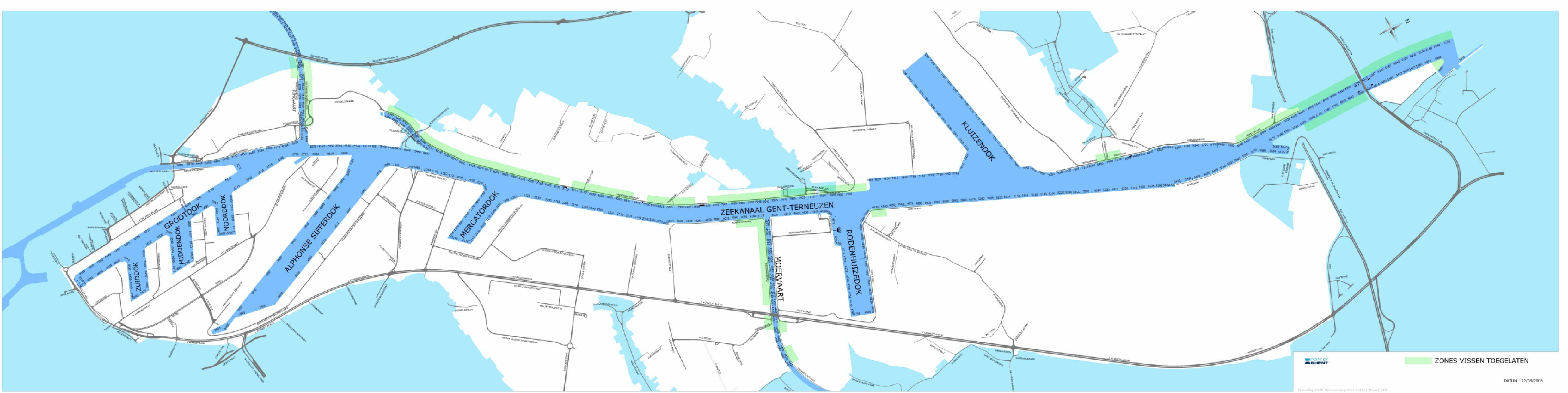
-
No. In the port area of North Sea Port it is not permitted to take off or land with hot air balloons. This prevents unsafe situations for passengers and companies.
The port area contains several BRZO/Seveso companies. These are companies with a risk of major accidents due to hazardous substances such as fertilisers and fuels. If a balloon takes off near these companies, it can create unsafe situations for passengers, companies and the surrounding area. For safety reasons, the safety authority advises against flying over Seveso sites and port areas with direct shipping traffic.
For the use of North Sea Port property by balloon operators, prior permission is required. North Sea Port does not grant permission to companies that organise balloon flights to use its land within the port area. Neither as a launch site nor for any other activity connected with ballooning.